
At a glance
Key takeaways
- Pads should develop a defined technical or tactical quality.
- The holder actively shapes distance, cues and pace.
- Defence and recovery belong inside combinations.
- Conditioning is useful only while the lesson remains visible.
Balance before volume
A combination is not finished when the final strike lands. The striker should recover stance, remain able to defend and be ready to move again. Pads expose whether somebody is generating force from a stable position or falling through every action.
Beginners benefit from shorter combinations that let them recognise each transition. Complexity should be added only when the movement remains controlled.
The holder is an active partner
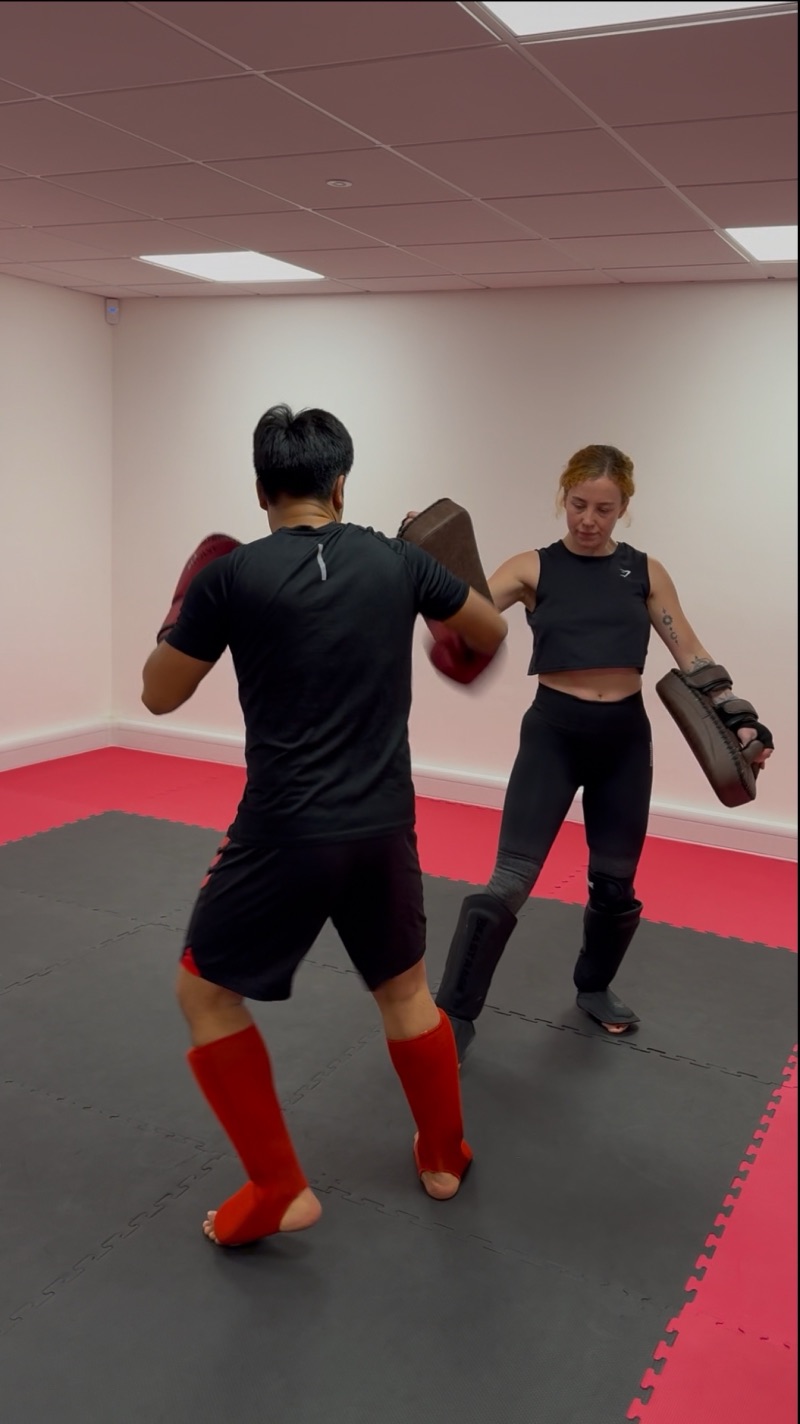
Good pad holding is neither chasing the gloves nor standing as a static target. The holder gives the correct distance, absorbs the strike safely and provides cues at a pace the striker can process.
As experience grows, the holder can move, return a controlled strike or change the sequence. That turns a memorised combination into a decision without sacrificing technical quality.
Defence belongs inside the round
Real striking is not a turn-taking exercise where one person attacks without consequence. Pad rounds can include checking a kick, covering, moving the head or leaving the exchange on an angle.
Adding defence immediately after attack teaches the striker to stay responsible for position. It also prevents the common habit of admiring the final shot and becoming unavailable for the next action.
Conditioning should preserve the lesson
Longer or faster rounds can develop work capacity, but fatigue must not erase the technical target. When form collapses completely, repeating more poor movement is not automatically productive.
Ouroboros separates Muay Thai technique, pad and sparring work across the week so each format can have a clear role in development.
A purposeful pad-round progression
The first round can isolate stance and one combination. The second adds movement before the cue. A later round includes a defensive return or asks the striker to choose between two sensible endings. Conditioning increases only after the technical behaviour remains recognisable.
This gives the coach something observable to correct. If every round contains unpredictable commands from the beginning, improvement can be confused with becoming better at guessing one holder’s personal sequence. A clear target makes feedback and repetition more useful.
Ouroboros separates Muay Thai technique, pad work and controlled sparring across the Romsey timetable. Beginners can experience these formats during the free trial and ask about suitable gloves or shin guards before buying equipment.
- Accuracy and balance
- Distance and movement
- Defence after attack
- Limited tactical choice
- Quality maintained under fatigue
What to do when it is your turn to hold pads
Ask the coach to show you the targets before you start. Agree one combination and a comfortable pace with your partner. Present the targets when you are ready, give a clear cue, then give the striker time to recover their stance. If a pad is moving out of reach or a strike is too hard for you to hold, pause and ask for a reset.
Swap roles after the agreed turn. As the striker, watch the pad rather than guessing the next strike. As the holder, give feedback the partner can use, such as ‘that was the right distance’ or ‘let’s slow down the last strike’. Add movement or a defensive cue only when you can both keep control.
Common questions
Is pad work the same as hitting a heavy bag?
No. A holder can move, cue decisions and return controlled attacks, while a bag provides consistent resistance without decision-making. Both are useful, but they solve different training problems.
Do I need to hit pads hard as a beginner?
No. Begin with balance, accuracy and safe communication with the holder. Power can increase as technique becomes consistent; hitting harder before you can control distance makes the round less useful.
What makes someone a good pad holder?
A good holder presents realistic targets, protects their own joints, matches the striker’s level and understands the purpose of the round. They do not create a memory test merely to display long combinations.