
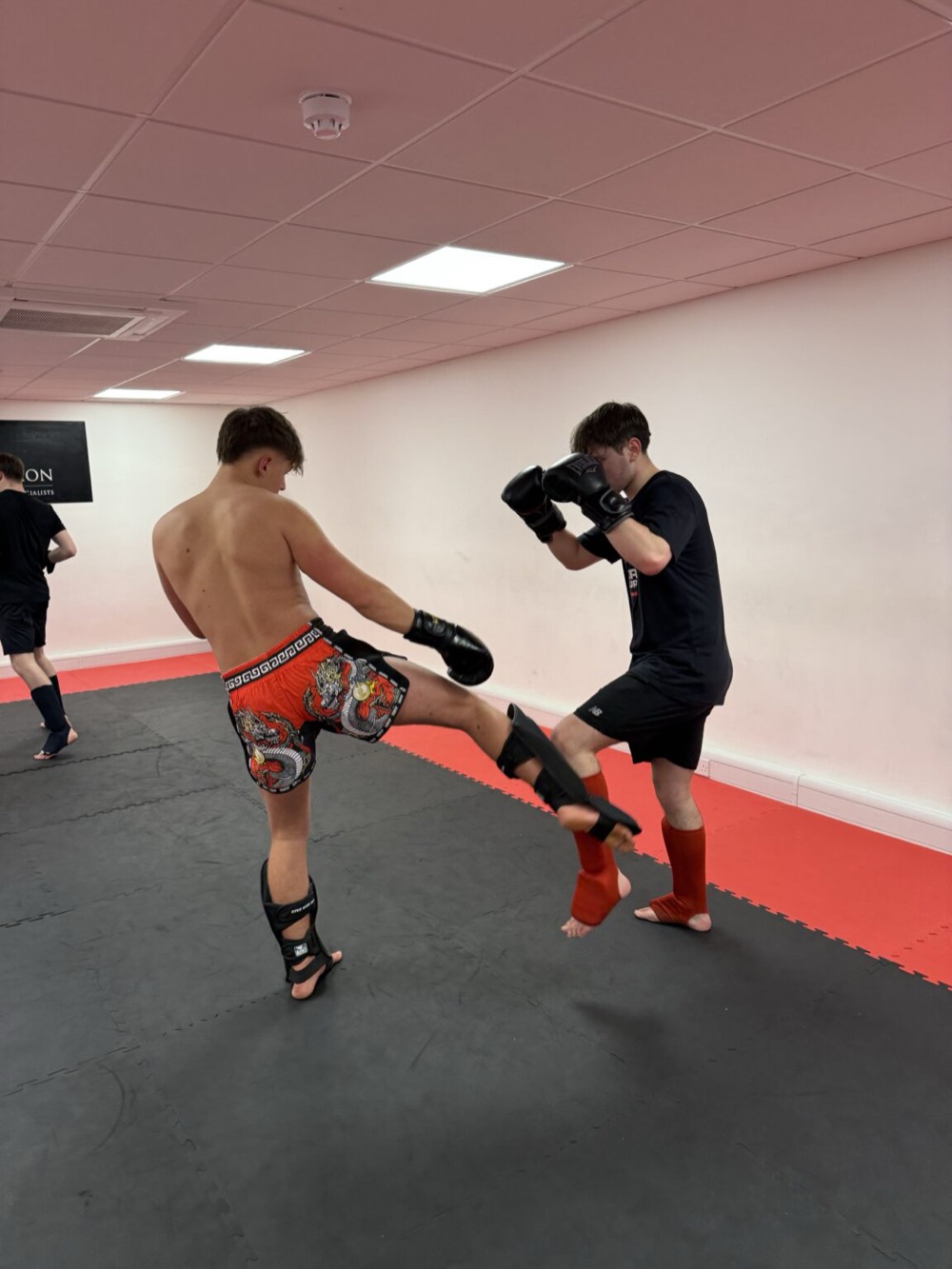
At a glance
Key takeaways
- Balanced stance is the foundation of defence.
- Range can prevent contact before a block is needed.
- Different attacks require different defensive tools.
- Every defence should lead to a stable next position.
Stance is the first defence
A balanced stance keeps the chin protected, the feet available and the body ready to absorb or avoid force. If a combination pulls you too far forward, your guard cannot solve every problem on its own.
Beginners should practise returning to stance after every strike. Defence becomes much easier when the body is organised before the attack arrives.
Manage range before contact
Footwork can make a strike fall short or change its angle. A small step may be safer and quicker than attempting a dramatic lean after the punch is already close.
Range also affects your response. The defence for a long kick is different from the frame or position needed in the clinch.
Use the right tool
Straight punches may be caught, parried, covered or avoided depending on timing. Kicks can be checked, blocked, moved away from or intercepted. No defence is universal.
Early drills should limit the attacker’s choices so the defender can recognise the cue. More options can be added as the response becomes stable.
Defend into a useful position
A defence is incomplete if it leaves you frozen or badly balanced. Learn to return, angle away, clinch or reset according to the situation.
Ouroboros teaches Muay Thai technique, pad work and controlled sparring in separate but connected sessions, giving beginners time to build defensive responsibility before higher pressure.
How Muay Thai defence is practised safely
Defence improves when the attacker presents a clear, controlled problem. A beginner might know that only a jab is coming, then progress to choosing between a jab and cross. Speed can increase as recognition and posture become reliable. This creates timing without forcing the student to guess against every possible strike.
Pad work can rehearse defensive returns, partner drills develop range and visual recognition, and technical sparring tests those skills with more freedom. Each format contributes something different and should not be rushed merely because open sparring appears more advanced.
Ouroboros offers Muay Thai technique, pads and sparring sessions in Romsey. Beginners can build foundations in the technical environment and move toward greater resistance when it serves their development, with partners agreeing on power and stopping whenever control is lost.
Common questions
What beginners ask
What defence should a Muay Thai beginner learn first?
Begin with stance, guard, distance and seeing straight attacks. The coach can then add covers, parries and kick checks progressively rather than presenting a large list without context.
Will defensive drills involve being hit?
Partner drills may include controlled contact, but pace and power should match experience and purpose. Ask the coach about the format before class if contact is a concern.
Why do I lose balance when checking kicks?
Common causes include a stance that is too narrow, shifting weight too late or lifting the leg without stable posture. A coach needs to see the movement to give specific feedback.