At a glance
Key takeaways
- MMA develops range, balance and decisions against resistance.
- Wrestling and grappling support staying upright and recovering position.
- Avoidance and leaving remain more important than proving a technique.
- No martial art can guarantee safety in every real situation.
Distance and awareness
Striking practice teaches how range changes. You learn when a person can reach you, how foot position affects movement and why balance matters before and after an action.
That physical understanding supports a more important priority: creating distance and leaving when possible. Training should not encourage somebody to remain in danger simply because they know techniques.
Staying upright and recovering position
Wrestling develops stance, balance and the ability to manage close contact. Takedown defence can help someone remain standing, while grappling teaches how to protect themselves and improve position if they reach the ground.
MMA connects these phases. Students experience how striking changes a clinch and how a takedown changes the immediate problem rather than treating each range as isolated.
Pressure-tested decisions
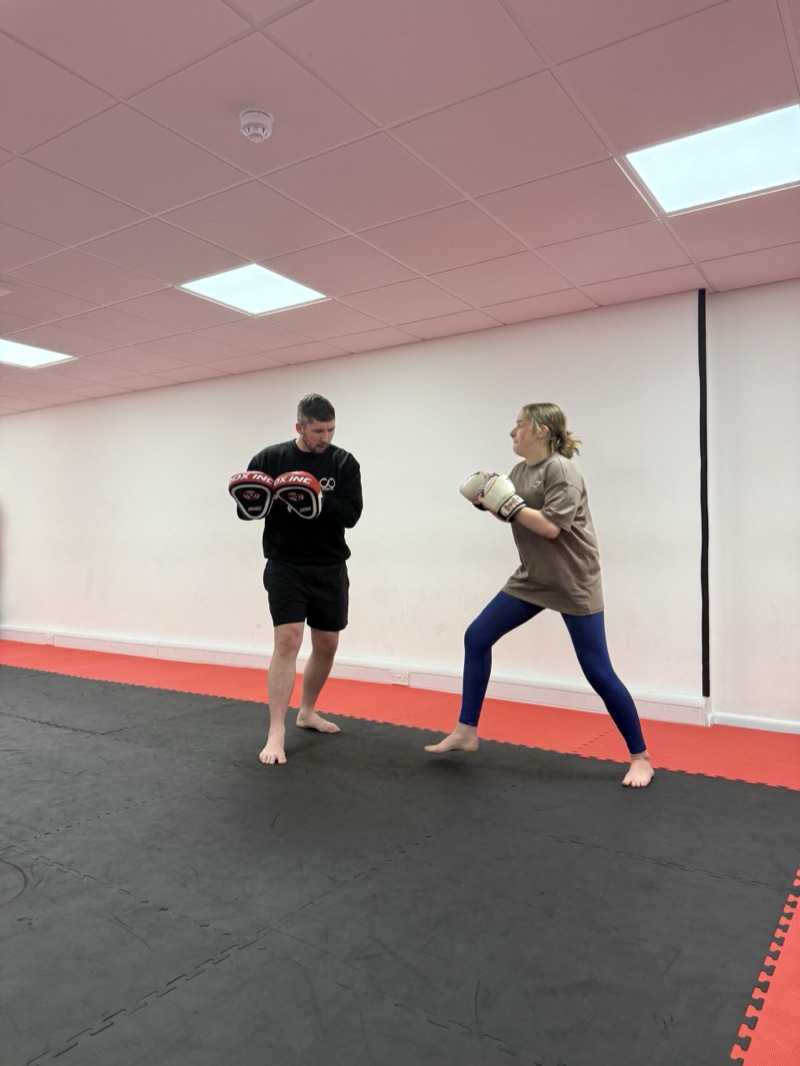
Cooperative drills introduce movement; controlled live work tests whether it can be recognised against resistance. This helps expose unrealistic assumptions and teaches students to regulate effort while solving an unpredictable problem.
The training partner and rules still create a safer environment than a real incident. That distinction should remain explicit.
What MMA cannot promise
No class can guarantee safety, account for weapons, multiple people or every surface, or replace situational judgement. Avoidance, de-escalation and leaving remain central. The legal use of force depends on circumstances and should not be reduced to a slogan in a gym article.
Train because robust skills and composure are valuable, not because anybody promises invulnerability.
What to prioritise away from the gym
In a coached round you know the rules, there are mats and your partner stops when told. A threatening situation outside training is different. If you have a safe way out, use it. Put distance between yourself and the danger, tell venue staff or security if they are nearby, and call 999 if there is immediate danger. The police guidance below covers what to do in a violent situation.
When comparing classes, ask how training teaches balance, controlled resistance and stopping on instruction. Those are skills you can practise. Avoid treating a drill as a script for an unpredictable encounter or assuming the sport’s rules tell you what is lawful outside the gym.
Common questions
Is MMA good for self-defence?
MMA develops robust striking, wrestling and grappling skills through partner resistance. Those qualities can be relevant, but training takes place under rules and cannot reproduce every environmental, legal or tactical factor in a real incident.
Is BJJ or striking more important for self-defence?
The situation determines the problem. Striking helps manage distance, wrestling affects whether you remain standing and BJJ provides options when grappling occurs. A rounded programme also teaches transitions between them.
Does self-defence training make confrontation safe?
No. Physical confrontation remains unpredictable. Awareness, de-escalation and leaving are preferable whenever possible, and knowing martial arts should not encourage unnecessary engagement.