At a glance
Key takeaways
- MMA skills change because several ranges are available.
- Striking creates reactions and must preserve takedown defence.
- Wrestling decides whether the exchange stays standing.
- Ground choices account for strikes, submissions and standing back up.
Striking creates reactions
Punches, kicks, knees and elbows can score and finish exchanges, but they also change posture, guard and distance. An opponent who raises both hands to defend may expose a path to the body or legs.
MMA striking therefore values balance and position after every action. A powerful combination is less useful if it leaves the striker unable to defend a takedown.
Wrestling decides where the exchange continues
Wrestling includes entries, takedowns, clinch control, takedown defence and the ability to return to standing. It links long-range striking to close-range grappling.
The wall adds another set of positions. Students learn to use head position, underhooks and footwork rather than treating the boundary as an interruption.
Grappling creates control and submissions
On the ground, position determines which person can strike, stand or attack a submission safely. BJJ provides a deep understanding of guards, passes, pins and escapes, while MMA changes some priorities because strikes and wall position remain relevant.
A technically strong grappler still needs to enter, maintain control and account for the opponent’s attempt to return to their feet.
Transitions are the real subject
The defining moments often occur between familiar positions: striking into a clinch, defending a takedown into an angle, or using ground control to stand. Connected drills help students recognise those moments.
Ouroboros teaches dedicated disciplines and integrated MMA in Romsey. Beginners can learn each part clearly while understanding how it belongs to the complete game.
What a beginner MMA class looks like
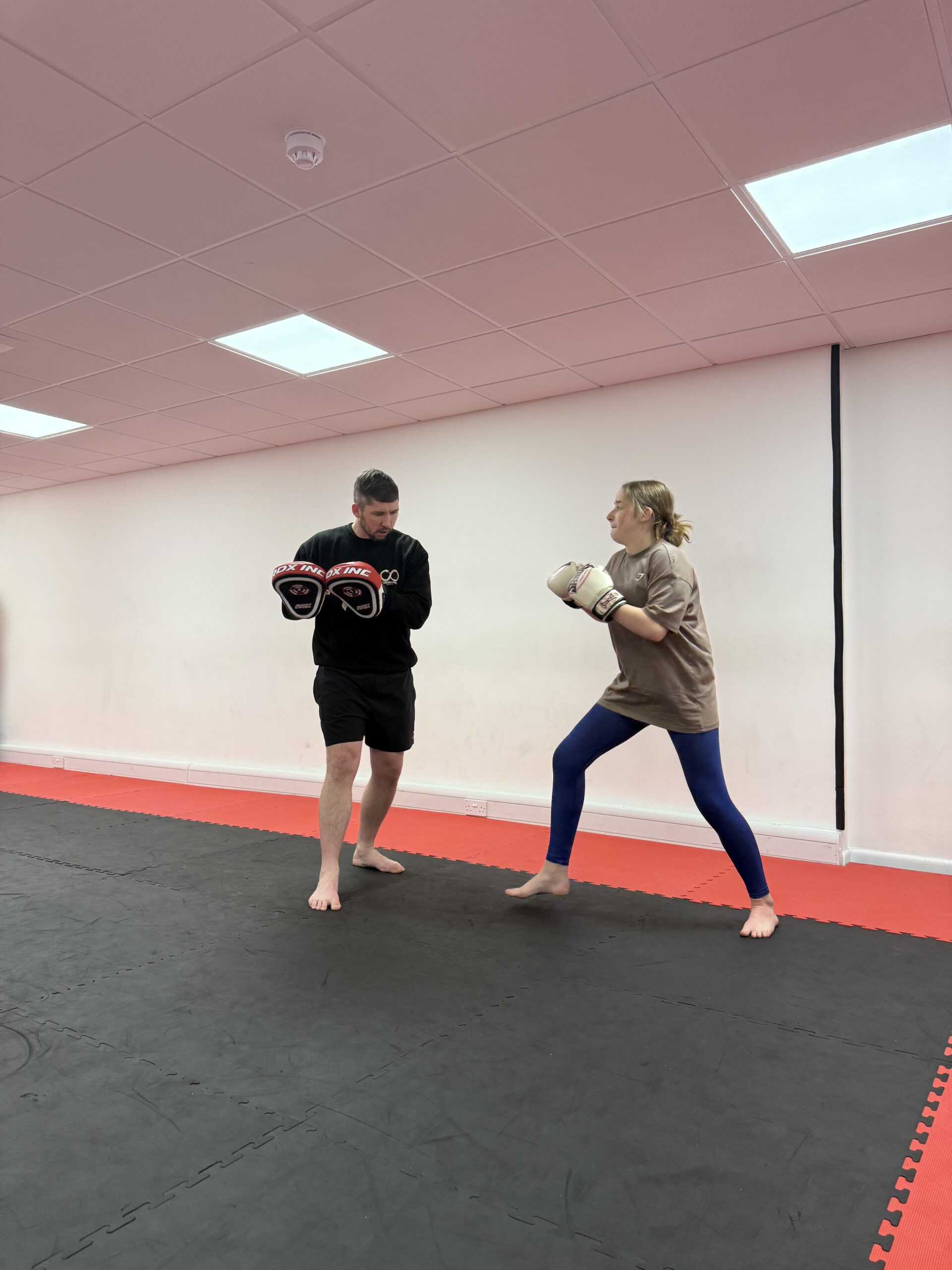
A beginner class does not ask you to combine the entire sport immediately. A session may focus on using a jab to enter the clinch, defending one takedown or controlling a ground position long enough to stand. Limiting the problem gives you time to recognise the transition instead of reacting randomly.
The coach can begin with cooperative movement, add a predictable reaction and then introduce controlled resistance. That progression makes the connection between ranges understandable while keeping the task suitable for somebody who has never trained before.
Ouroboros teaches the component disciplines and their transitions at a dedicated academy on Romsey Industrial Estate. Members from Romsey, North Baddesley, Chandler’s Ford, Nursling and Southampton North can use the seven-day free trial to experience MMA, Muay Thai and BJJ before building a weekly routine.
- Technical explanation
- Partner practice with a defined role
- Progressive resistance
- Feedback on position, timing and control
Common questions
What beginners ask
What does MMA stand for?
MMA stands for mixed martial arts. It combines striking, wrestling and submission grappling under one ruleset and places particular emphasis on transitions between those ranges.
Is MMA suitable for complete beginners?
Yes, when the programme introduces stance, safety and core positions progressively. Beginners should not be placed directly into unrestricted fighting.
Do I need to learn BJJ before starting MMA?
No. Previous BJJ can help on the ground, but an integrated MMA programme can teach the relevant grappling alongside striking and wrestling from the beginning.